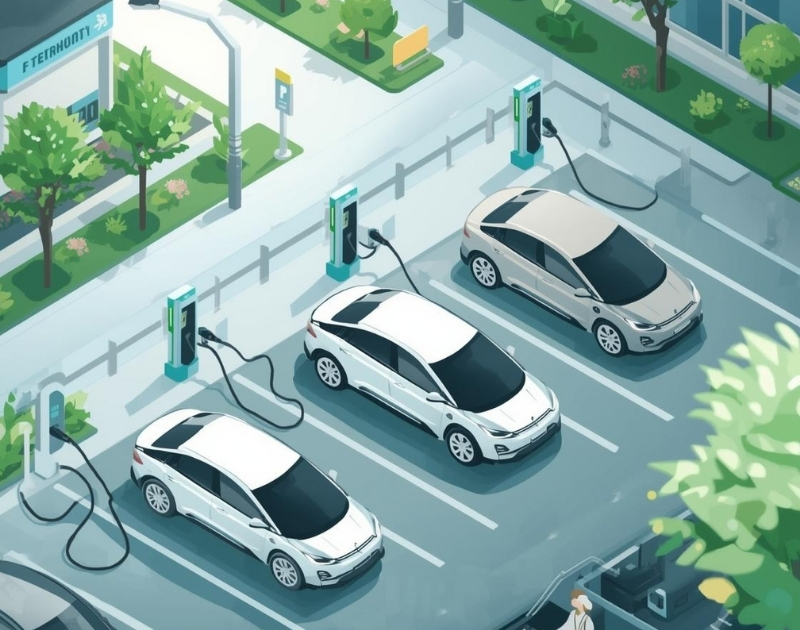



Every summer, thousands of electric vehicle drivers hit the road for their holidays, often for the first time on such a long journey.
Unlike a daily commute, a summer road trip requires a different approach: the most popular charging stations fill up quickly, and the network, however well-developed, faces a surge in traffic it doesn't see the rest of the year. However, a little foresight is all it takes to turn a potentially stressful trip into a breeze.
On major routes, peak holiday weekends see a significantly higher number of electric vehicles than usual.
The result: fast-charging stations at key transit points can have queues or even temporary outages. This isn't inevitable, but it is a factor to include in your planning, just as you would allow extra time to avoid traffic jams.
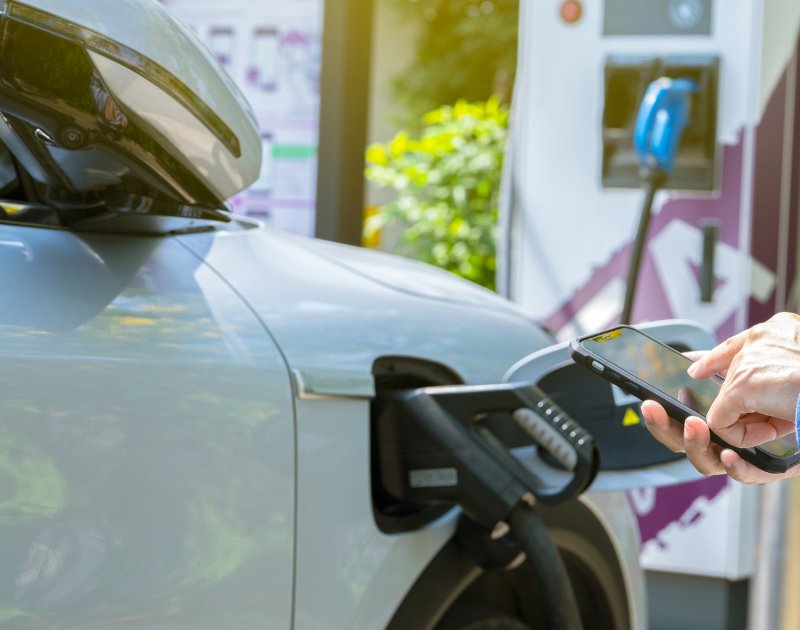
It is precisely to avoid having to improvise your stops that the Oriway app includes a trip planner designed for long-distance travel.
The concept is intentionally simple: you enter your starting point and your destination, your battery level at the time of departure, and the percentage you would like to have remaining upon arrival.
Using these three pieces of information, the planner calculates the optimal route and maps out the necessary charging stops for you, at the right place and the right time, so you don't have to juggle multiple maps or guess when you might run out of range.
What sets this planner apart from a simple distance calculator is its consideration of the route's actual topography. A kilometer driven uphill consumes significantly more energy than a kilometer on flat ground, while a descent can actually help you regain range through regenerative braking. Therefore, a route crossing a mountain pass or hilly region is entirely different in terms of real-world consumption compared to an equivalent trip on a flat highway.
By integrating the terrain of your route into its calculations, the app avoids two common pitfalls: arriving at a charging station with less battery than expected after a climb, or stopping unnecessarily when a descent has allowed you to recover range.
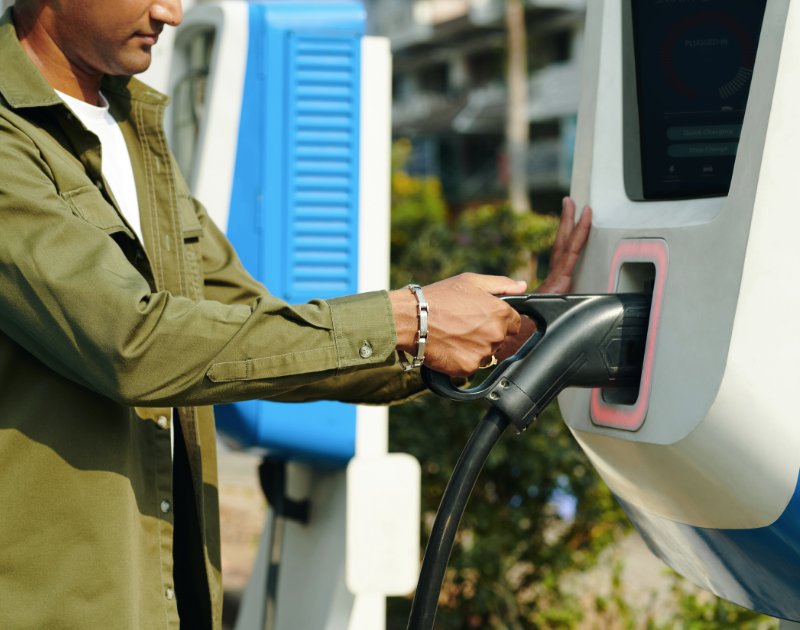
Once the route is calculated, everything is managed from the app: locating the selected charging stations, guided navigation to each stop, and starting the charging session without any extra steps.
The goal is for the planning to be done once, before you leave, so the rest of your trip unfolds without you needing to pull out your phone at every stage to check, compare, or worry.
Even with a well-planned route, real-time availability remains useful for adjusting your trip at the last minute.
Delaying your stop by ten minutes or a few kilometers is often enough to avoid the peak crowds at a busy rest area. You should also take advantage of off-peak hours, especially early in the morning, for the busiest sections of your trip.
This is the most stressful situation, and the best defense is to always have a backup plan in mind. If a planned station turns out to be unavailable when you arrive, the app automatically recalculates a new stop nearby without you losing track of your original route.
Every charging session completed via Oriway, including during your vacations, adds to your Watas loyalty account. The more you drive and charge with the app, the more Watas you accumulate, which can then be converted into benefits for your future charging sessions.
Yes, unlike daily use where you often charge to 80%, starting at 100% allows you to space out your stops more on a long trip.
You enter your starting point, your destination, your battery percentage at departure, and your desired percentage upon arrival. The app calculates the optimal route and automatically positions the necessary charging stops, taking the terrain of the route into account.
Because a kilometer uphill consumes more energy than a kilometer on flat ground, while a descent often allows you to recover range through regenerative braking. Ignoring this factor means underestimating or overestimating the actual charging needs on a hilly route.
Every charge made through the app earns you Watas, which can then be converted into benefits for your future charging sessions. The more you use Oriway, the more your trips—including your summer road trips—reward you.
The app automatically recalculates an alternative nearby, saving you from having to scramble for a backup solution.
At a properly sized fast-charging station, you can generally expect to spend between 20 and 30 minutes to regain a comfortable range—often about the same amount of time as a standard break in a gas-powered car.
Plan your route in an instant and let the app calculate your charging stops. Download the Oriway app →