


TCO, or Total Cost of Ownership, remains the ultimate benchmark for any fleet decision, whether electric or combustion. But with electric vehicles, the calculation gets complicated: energy and maintenance cost less, but the purchase price is higher and the residual value is more uncertain.
We have already questioned the limitations of this indicator in isolation in our article Why TCO is dead, long live TCM ; here, we focus on concrete levers to optimize TCO itself before diving deeper into its analysis.
Understanding where these levers truly lie allows you to move beyond superficial comparisons and build a genuinely profitable fleet strategy.
TCO adds up all the costs generated by a vehicle over its holding period and then relates them to the mileage covered to obtain a cost per kilometer that can be compared across different powertrains, as noted by Flotauto in its guide to calculating automotive fleet TCO.
In practical terms, this calculation includes vehicle financing (purchase or lease), energy, maintenance, insurance, taxes, associated charging costs, and finally the residual value, which reduces the total cost. It is precisely this last item, often underestimated, that can tip the TCO calculation one way or the other.
This is where the gap compared to combustion engines is most significant. The Automobile Propre TCO simulator allows you to precisely compare this cost based on your chosen charging profile: home charging, on-site at the office, or public charging on the go.
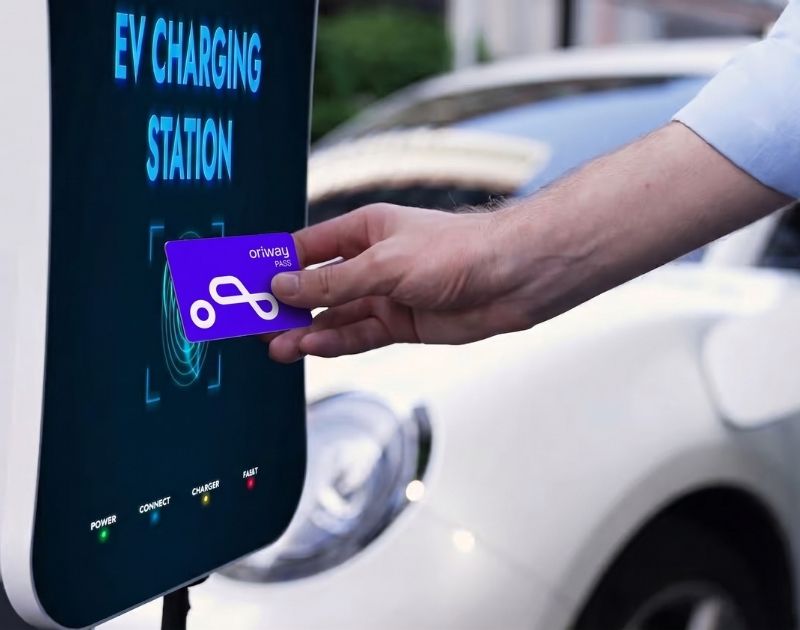
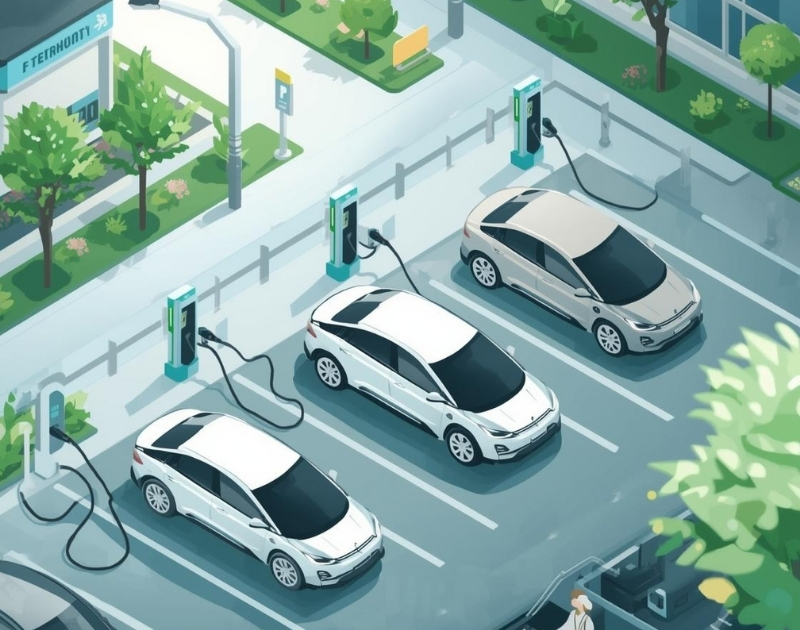
Charging strategy thus becomes a key tool for managing TCO, rather than just a matter of convenience: charging primarily on slow or fast chargers at home or on-site is structurally cheaper than relying on rapid public charging, where the price per kWh remains significantly higher.
This is what we detail in our article TCO is dead, long live TCM, which takes this logic a step further by integrating the entire cost of mobility, not just the vehicle itself.
With no oil changes, clutches, or exhaust systems to maintain, an electric vehicle is mechanically less demanding than an equivalent internal combustion vehicle. Testimonials from fleet managers collected by Flotauto in its report on the TCO of electric vehicles confirm this trend in the field, with feedback citing several years of use without any major mechanical incidents. However, this benefit should be qualified: tires, brakes, consumables, and battery health monitoring remain items that must be budgeted for over the duration of ownership.
The French tax framework clearly favors electric vehicles over high-emission internal combustion vehicles, notably through a penalty that can amount to tens of thousands of euros on the most polluting models, and through a much more favorable benefit-in-kind scheme for electric vehicles.
Several testimonials collected by flotauto.com illustrate the scale of this effect, with fleet managers noting a significant reduction in monthly benefits in kind when switching to electric, which correspondingly reduces the social security contributions borne by the company. This parameter deserves to be included in TCO calculations just as much as energy or maintenance, as it can represent a significant difference over the vehicle's ownership period.
It is often the most poorly anticipated item in internally calculated TCO.
Residual value corresponds to the estimated resale price of the vehicle at the end of the holding period, and it depends heavily on the chosen model, its wear and tear, and its appeal on the used market at the time of resale.
An over-equipped vehicle or one whose model quickly becomes less desirable can see its residual value drop sharply, degrading the final TCO despite savings made on energy and maintenance. Choosing your models wisely, while taking into account their resale potential on the electric used vehicle market, therefore remains a strategic lever in its own right.
Several reports from fleet managers compiled by flotauto.com converge on the same threshold: beyond 15,000 kilometers driven per year, the TCO becomes structurally more favorable to electric vehicles, with this advantage strengthening as mileage increases thanks to cumulative fuel savings. Conversely, for fleets with low annual mileage, the initial purchase price gap may never be fully offset over the holding period.
This mileage threshold remains a useful benchmark for evaluating an initial renewal scenario, but it is no longer sufficient on its own to accurately assess the residual value of an electric vehicle. The criterion that is gaining momentum, and which will gradually take precedence over mileage alone, is the actual state of health of the battery : two vehicles with the same mileage can have batteries in very different states depending on how they were used (frequency of fast charging, depth of discharge, heat exposure), which directly impacts their resale value.
This observation argues for a differentiated approach based on usage profiles within a single fleet, rather than a uniform electrification of the entire fleet, and for monitoring that focuses increasingly on battery health rather than just the odometer.
Optimizing the TCO of an electric fleet means looking beyond the purchase price to consider the cost per kilometer over the vehicle's entire lifecycle.
This involves segmenting your fleet based on each employee's mileage and usage profile, structuring a charging strategy that prioritizes the least expensive locations, tracking expenses precisely item by item rather than using an aggregate TCO, and regularly re-evaluating these assumptions as tax regulations and the electric vehicle resale market evolve.
This is also what we recommend in our article TCO or TCM: which indicator to track before renewing your fleet this fall, which details how to prepare this analysis ahead of a renewal decision.
Feedback from fleet managers suggests this threshold is around 15,000 kilometers per year, with the advantage increasing as mileage grows due to cumulative energy savings.
In most scenarios, yes, especially when charging at home or on-site. The gap narrows significantly if the vehicle relies primarily on public fast charging, which is more expensive per kWh.
Yes, it is a significant factor: the current tax system clearly favors electric vehicles in this regard, which reduces the company's social security contributions and improves the overall TCO accordingly.
Because it directly reduces the total cost of ownership: a well-chosen vehicle that retains a good resale value can significantly improve the final TCO, whereas an over-equipped model or one that is less desirable on the secondary market can have the opposite effect.