

Since its adoption, the Mobility Orientation Law, better known by the acronym LOM, has imposed increasingly stringent obligations on companies with vehicle fleets, with thresholds that tighten over the years.
In 2026, a large number of companies are subject to these obligations without always being fully aware of them, whether regarding the greening of their vehicle fleet or the installation of charging points in their parking lots. For the fleet manager, they are often the one who must handle this issue internally, balancing regulatory monitoring, budget decisions, and coordination with HR and executive management.
However, failure to comply with these obligations carries very real financial penalties. This article provides an overview of the nature of these obligations, the potential sanctions, and concrete levers for compliance, in connection with our comprehensive guide to corporate charging.
As specific thresholds and schedules are updated regularly by decree, we recommend that you verify the current official texts or consult with legal counsel before making any binding decisions regarding your compliance.
Adopted to accelerate the transition toward cleaner and more sustainable mobility, the Mobility Orientation Law includes, among its many components, two provisions that directly affect companies with vehicle fleets: first, the obligation to progressively green this fleet during renewal, and second, the obligation to equip certain corporate parking lots with charging infrastructure for electric vehicles. These two components, while distinct, share the same goal: to accelerate the adoption of low-emission vehicles in the professional sector, which accounts for a significant portion of the vehicles on the road in France.
The first part of the LOM law concerns the renewal of corporate vehicle fleets.
Companies managing a fleet above a certain size must incorporate an increasing proportion of low-emission vehicles with each renewal, or face financial penalties calculated based on the gap between the set target and the actual renewed fleet.
This requirement does not mean that the entire fleet must be electrified overnight, but rather that a gradual trajectory must be established, year after year, during each vehicle renewal cycle.
We detail the method for structuring this trajectory in our dedicated article: How to successfully green your corporate fleet.
Sources: Légifrance — Article L224-10 of the Environmental Code: https://www.legifrance.gouv.fr/codes/article_lc/LEGIARTI000044338550
As of 2025, this quota system was transformed into an incentive tax for private companies by the 2025 Finance Act: Légifrance — Article 28, LAW no. 2025-127 of February 14, 2025, on finance for 2025: https://www.legifrance.gouv.fr/eli/loi/2025/2/14/ECOX2423405L/jo/article_28
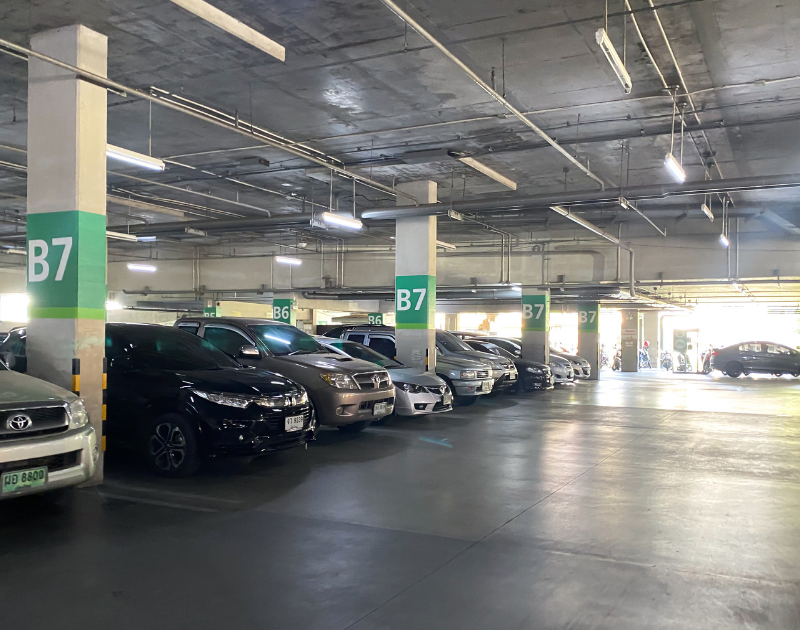
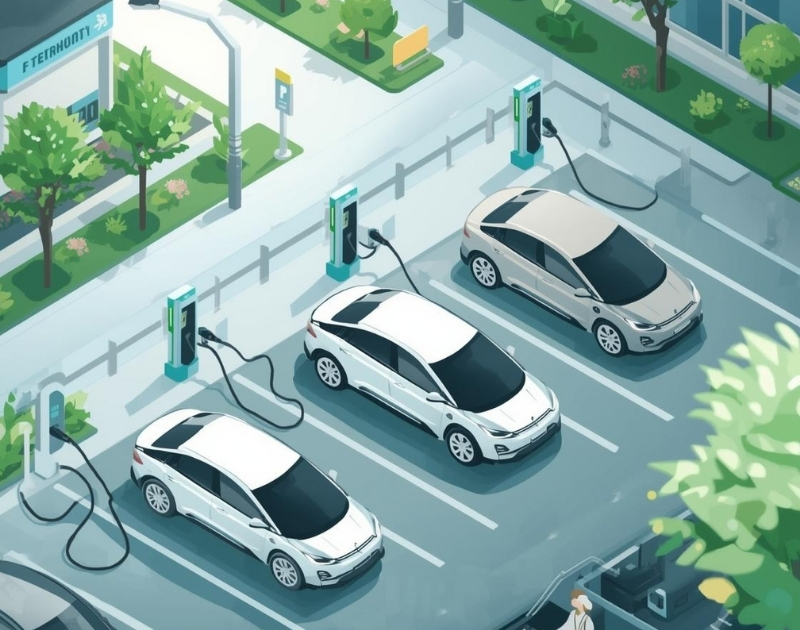
The second part of the LOM law concerns corporate parking lots. Beyond a certain number of parking spaces, companies must gradually equip their lots with charging points, or at the very least, pre-equipment to facilitate future installation (conduits, technical ducts, reserved electrical capacity).
This obligation applies differently depending on whether the parking lot is new, undergoing renovation, or already existing, with compliance deadlines spread out over time. We detail the budgetary framework for this compliance in our article: How to estimate the cost of installing a charging station for your business.
Sources: Légifrance — Section 3: Parking of electric vehicles (Articles L113-11 to L113-17): https://www.legifrance.gouv.fr/codes/id/LEGIARTI000041563731/2021-07-01
Service-Public.fr (updated summary sheet, more accessible for a general audience): https://entreprendre.service-public.gouv.fr/vosdroits/F38491
In practical terms, for a company that has not yet begun its compliance process, 2026 is a pivotal year: greening thresholds continue to rise for significant fleet sizes, while the requirement to equip parking lots is gradually extending to a broader range of corporate sites, beyond just new or recently renovated parking facilities.
Companies that have not anticipated these obligations will find themselves having to catch up on two fronts simultaneously: renewing their vehicle fleet on one hand, and installing charging infrastructure on the other. It is precisely this dual constraint that makes it essential to address these two issues in a coordinated manner rather than separately.
Failure to meet greening quotas exposes the company to financial penalties, calculated based on the shortfall of low-emission vehicles relative to the target set for the year in question.
These penalties apply per vehicle and per identified shortfall, which can represent a significant burden for large fleets that have not initiated their greening trajectory in time.
Beyond just financial penalties, prolonged non-compliance can also damage a company's reputation, particularly with stakeholders who are increasingly attentive to the environmental commitments made by their business partners.
Sources: Regarding greening: as of March 1, 2025, the penalty is no longer a flat-rate fine but the Annual Incentive Tax (TAI) itself, calculated based on the gap from the target — legal framework: same Article 28 of Law No. 2025-127 of February 14, 2025, mentioned above, and official administrative commentary from the DGFiP (BOFiP): https://bofip.impots.gouv.fr/bofip/14720-PGP.html/identifiant=BOI-AIS-MOB-10-30-40-20260225
Compliance with the LOM law is not limited to purchasing electric vehicles: it also requires having reliable charging infrastructure capable of supporting this transition without creating friction for employees.
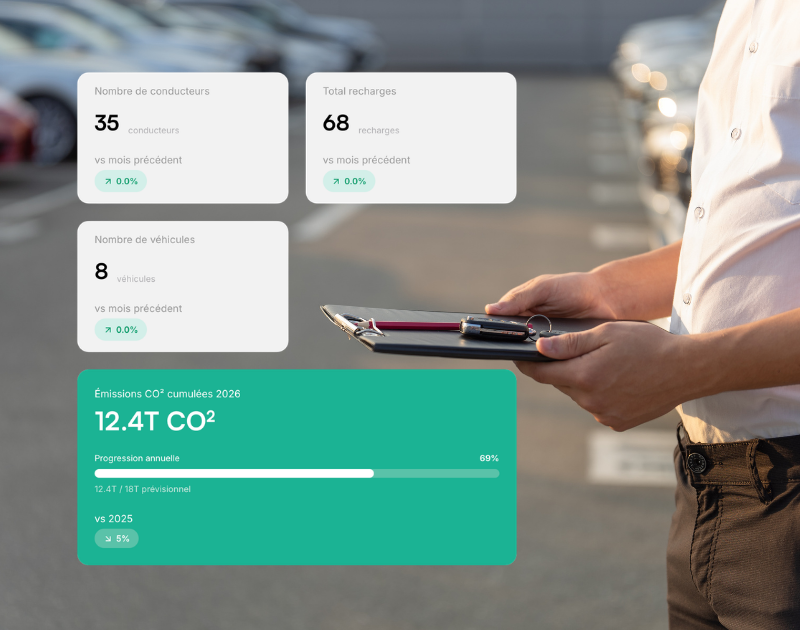
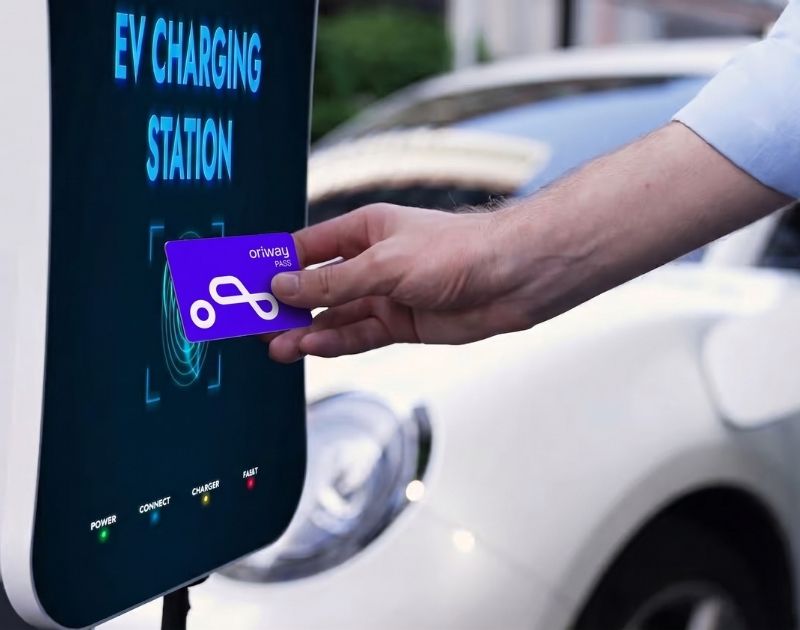
This is where a centralized charging solution like the one offered by Oriway proves its value: it allows for the supervision of on-site, public, and home charging for employees, while automatically generating the data required for the company's regulatory and environmental reporting.
This reporting is a natural part of a broader approach to tracking the company's carbon footprint, which we detail in our article on Scope 1, 2, and 3 carbon accounting.
More generally, LOM compliance is best tracked as one of many indicators in fleet management: we recommend integrating it into the fleet manager's overall dashboard, alongside the key performance indicators presented in our article Fleet Management 2026: The 5 Essential KPIs to Track.
Companies managing a fleet of vehicles exceeding a certain threshold are subject to greening obligations, while companies with parking lots over a certain number of spaces are subject to the requirement to install charging stations. As the specific thresholds evolve by decree, it is recommended to check the regulations currently in force for your specific situation.
The quota of low-emission vehicles to be integrated during fleet renewal increases each year according to a schedule set by decree. We recommend consulting the updated official texts or specialized legal counsel to determine the exact threshold applicable to your company.
It faces financial penalties calculated based on the gap between the set greening target and the actual composition of its renewed fleet, as well as potential reputational damage among its stakeholders.
By combining a progressive fleet greening trajectory with the deployment of managed and centralized charging infrastructure, such as the Oriway solution, which facilitates both daily use and regulatory reporting.
Stay ahead of your LOM requirements with a smart charging solution for your entire fleet. Request an Oriway demo →