


France is currently experiencing intense heatwaves. While these extreme temperatures put a strain on our bodies, they also take a direct toll on our electric vehicles and their batteries.
Between the thermal management required to cool the battery and the intensive use of air conditioning in the cabin, our vehicles' range can drop dramatically. So, how can you balance driving comfort with energy efficiency? What are the real figures for this increased consumption?
Here is a comprehensive overview and practical tips you can adopt today to optimize your summer trips.
Contrary to popular belief, it is not just the air conditioning that draws on your energy reserves during heatwaves; it is also a chemical and structural phenomenon.
The ideal operating temperature for a lithium-ion battery is between 20°C and 25°C. Above 30°C, internal chemical reactions within the cells accelerate abnormally. To prevent premature degradation and protect the components, the vehicle's thermal management system (the BMS for Battery Management System) must consume a significant amount of energy to actively cool the battery, often via a liquid cooling circuit.
Physics also works against us: warm air is less dense than cold air. While this slightly reduces aerodynamic drag at high speeds, extreme heat combined with scorching asphalt increases the rolling resistance of the tires, forcing the electric motor to draw more energy to maintain its speed.
Excess consumption linked to air conditioning and heatwaves varies greatly depending on the driving environment (urban or highway). Several institutions and specialized institutes have precisely quantified these losses.
A major study conducted by the specialized organization Recurrent, based on real-time data from nearly 30,000 electric vehicles during periods of extreme heat, highlights a very clear capacity loss curve:
According toADEME's analyses on eco-driving best practices, air conditioning does not impact your trips in the same way depending on your average speed. The agency points out that using air conditioning in the city, where stops are frequent and average speeds are low, can increase energy consumption by +20% to +35%. On the highway, this impact levels off to just +6% to +15% in extra consumption.
Did you know? According to ADEME data, at an outside temperature of 30°C (86°F), air conditioning set to 26°C (79°F) already increases energy demand. But if you lower the thermostat to 20°C (68°F) instead of 26°C, this extra consumption instantly jumps by an additional 30% to 40%.
However, blaming cabin comfort alone would be a mistake. As explained by the specialized magazine Auto Plus in its investigation into electric vehicle range, it is not the passenger air conditioning that consumes the most energy during a heatwave.
The real culprit is the active cooling system for the battery itself. When temperatures soar, lithium-ion cells overheat. To prevent any risk of premature degradation or fire, the car must engage powerful liquid pumps to cool its own technical components. It is this invisible, automated thermal management that really causes your range gauge to plummet.
It is entirely possible to travel in comfort without watching your charge indicator melt away. Follow these eco-driving tips specifically for electric vehicles.
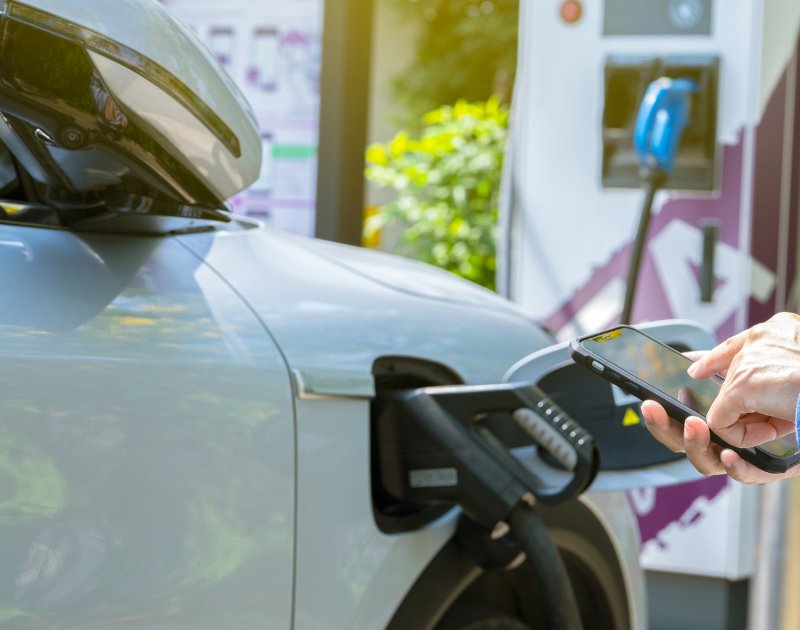
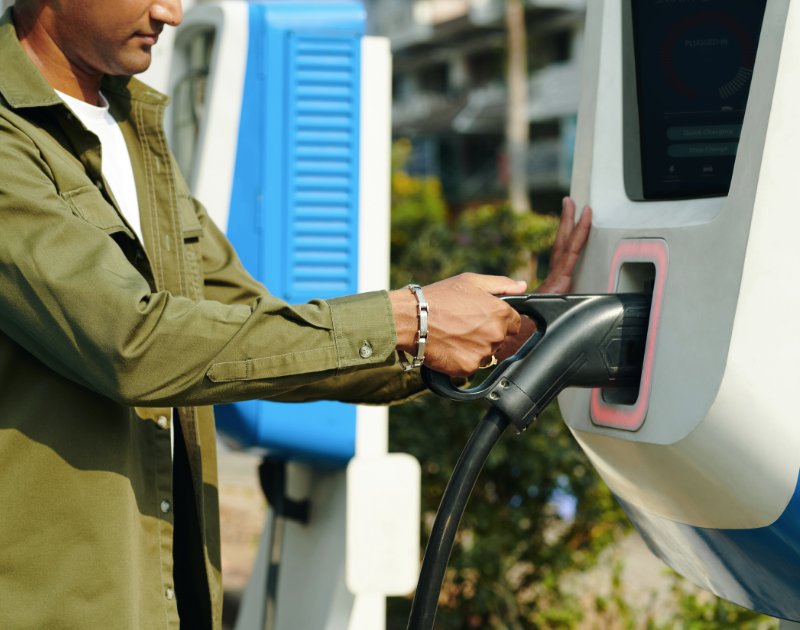
This is the number one habit to adopt. Before you hit the road, turn on the air conditioning remotely using your manufacturer's mobile app while the vehicle is still plugged in to its charging station. The energy required to cool the cabin from 40°C to 22°C will be drawn directly from the home or public power grid, rather than from your battery. Your battery stays at 100%, and your cabin is cool from the moment you start your trip.
This protocol is explicitly recommended by ENGIE Vianeo in its heatwave and electric mobility guide, as well as by energy supplier Alpiq in its practical guides on battery protection. They point out that by doing this, "the energy used comes from the grid and not the battery, maximizing your initial range."
Don't make the mistake of blasting the air conditioning the moment you get into a car that has been sitting in direct sunlight. During the first two minutes of driving at low speed, drive with the windows open to create a draft and flush out the superheated air (which often exceeds 50°C). Once that air has been cleared, roll up the windows and turn on the air conditioning.
To spare the compressor, avoid thermal shock. Don't set your air conditioning to 19°C if it's 35°C outside. Try to maintain a maximum difference of 5°C to 7°C from the outside temperature. Also, always activate the interior air recirculation button. The system will cool air that is already partially conditioned in a closed loop rather than draining the battery trying to cool scorching outside air.
Heated and ventilated seats, when the vehicle is equipped with them, are an incredibly smart alternative. Rather than cooling the entire cabin (a volume of several cubic meters), they provide targeted thermal comfort in direct contact with the driver's body, consuming only a fraction of the energy. This localized and optimized approach to comfort is the future of onboard energy management.
Your vehicle's "Eco" mode doesn't just adjust the accelerator pedal response; it also limits the maximum power of the air conditioning compressor without cutting off the cooling. Adopt a smooth driving style: repeated hard acceleration raises the battery's internal temperature, forcing the liquid cooling system to activate at the expense of your range.
Driving data analysis shows that sudden acceleration in hot weather doubles the thermal load on the cooling circuit. This is why automotive distribution networks, such as HESS Automobile, systematically recommend combining Eco mode with eco-driving to curb cumulative overconsumption (AC + battery cooling) during heatwaves.
No. At high speeds (above 45-50 mph), driving with the windows open completely ruins the vehicle's aerodynamics. The drag created causes higher energy consumption than a modern, regulated air conditioning system. On the highway, keep the windows closed and use the air conditioning.
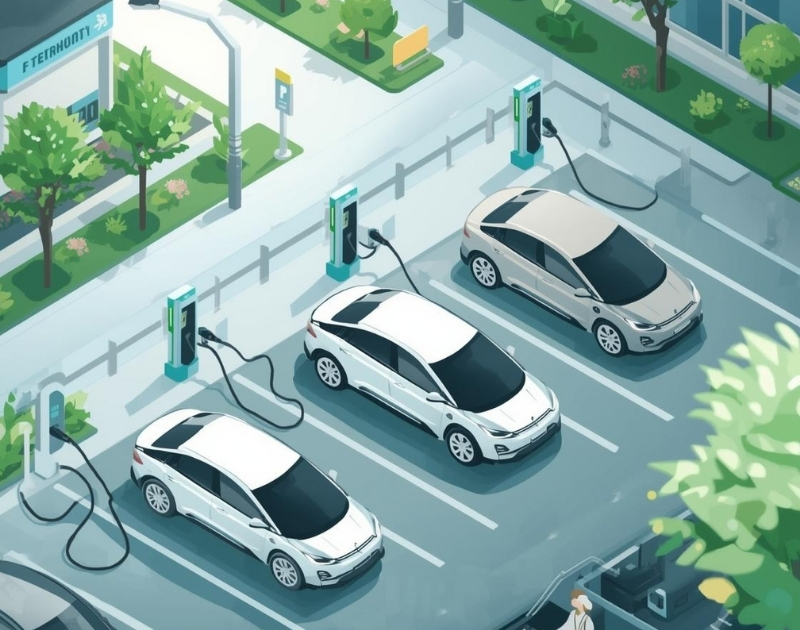
Yes. To preserve the physical integrity of the cells and prevent thermal runaway, the charging station and the vehicle communicate to reduce the charging power (throttled charging current). This is known as the phenomenon of thermal regulation. To limit this effect, try to charge early in the morning or late at night, and choose charging stations that are shaded or located underground.