


This article is based on the findings of the report Mapping climate disinformation in French and Brazilian media, published in October 2025 by Data For Good, QuotaClimat, and Science Feedback, as part of a collaboration between the Climate Safeguards project and the Observatory of Media on Ecology.
The scope of this study is very clearly defined. It exclusively analyzes climate disinformation, in the strict sense defined by academic literature and international fact-checking standards. Related environmental topics (biodiversity, natural resources, or agriculture not directly linked to the climate) are explicitly excluded from the scope of analysis.
In terms of geography and media, the study focuses, for France, on the audiovisual information landscape. It covers programs classified as "news" by Arcom, broadcast on 18 national television and radio channels, both public and private, accessible within French territory. This scope notably includes TF1, France Télévisions, BFM TV, CNews, LCI, Arte, as well as France Inter, France Info, RTL, Europe 1, and RMC.
The analysis covers the period from January to August 2025, and is based on a detection system combining:
This framework is central: it is not an editorial judgment, but an operational approach based on the factually false or misleading nature of the content. This is where the study highlights a key phenomenon for businesses: disinformation no longer targets science, but solutions. Mobility plays a strategic role in this.
*Climate misinformation is defined by Data For Good, QuotaClimat, and Science Feedback in the study as follows. It is distinguished by the speaker's lack of demonstrated intent to cause harm, which may therefore stem from error or susceptibility to misleading narratives.
The study analyzes 529 detected cases of misinformation. The striking figure is as follows: 90% of narratives target solutions.
The study details the thematic breakdown of attacks against solutions:
This shift in discourse corresponds to the “new climate denial” : a narrative that no longer disputes the facts (global warming is real), but instead undermines the feasibility, legitimacy, and economic rationale of taking action.
Why do 9% of narratives specifically target mobility? In reality, this figure is massive because mobility is a "front-line" transition lever.
Unlike heavy industry, corporate fleets are renewed regularly. Decisions are made at the operational level and impacts are visible in the short term. This is precisely what makes mobility "dangerous" for those who favor the status quo.
The company vehicle is a production tool, a social marker, and a significant cost item. Disinformation here exploits the "fear of loss": loss of autonomy, profitability, or freedom.
Low-emission zones, taxation, the end of combustion engines: these are all levers fueling anxiety-inducing narratives about "punitive ecology." The report also notes that spikes in disinformation often coincide with legislative news.
The study shows that disinformation relies on the repetition of narratives that create a truth bias. For mobility, this translates into:
The report highlights that these narratives are primarily driven by political guests (24%) and private-sector columnists or journalists (46%). Repetition, more than veracity, becomes the driver of impact.
The study compares media disinformation with concerning opinion data: 71% of French people believe that electric vehicles are just as harmful as combustion-engine ones. Acceptance of the ban on the sale of combustion-engine vehicles has fallen to 34%. This is not a technical rejection, but the result of successful information obfuscation.
For CSR managers, carbon footprint analysts, and fleet managers, these narratives produce three very concrete effects.
1. Inaction as a default strategy
Faced with uncertainty largely fueled by climate misinformation, many companies are currently adopting a wait-and-see approach.
Fleet renewal decisions are being postponed, structural trade-offs are frozen, and the retention of combustion-engine vehicles is justified by a logic of "caution" perceived as rational.
This inaction is not the result of a lack of will, but of a muddled information environment in which the perceived risk of transition seems higher than that of the status quo.
2. Biased fleet decisions
When a decision is finally made, it is too often based on an incomplete or biased interpretation of actual usage.
Operational constraints are poorly defined, the range of electric vehicles is overestimated as a major obstacle, and the total cost of ownership (TCO) is assessed based on dominant narratives rather than factual data.
In this context, misinformation does not just block action: it degrades the very quality of the decisions being made.
3. A weakened carbon trajectory
This combination of inaction and biased decision-making has a direct impact on companies' climate trajectories.
Since mobility remains one of the primary sources of emissions in carbon footprints, every year of delay widens the gap toward meeting decarbonization targets.
In the medium term, this lag exposes companies to a triple risk: regulatory (due to the progressive tightening of standards), financial (via deferred and concentrated transition costs), and reputational (by undermining the credibility of stated CSR commitments).
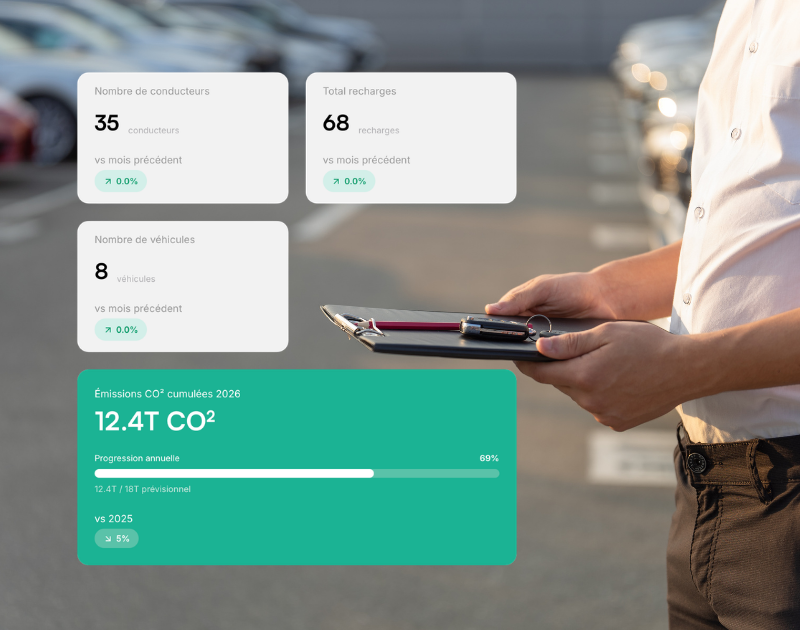
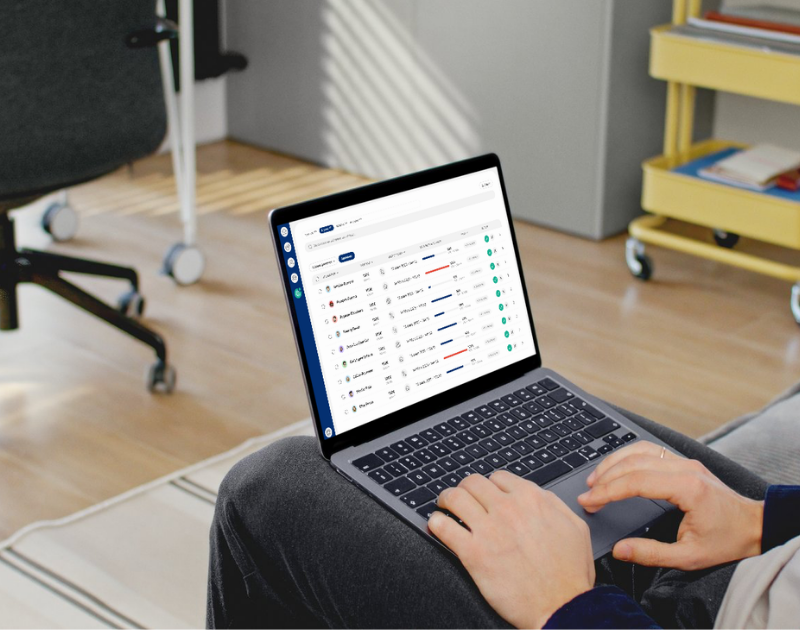
While misinformation plays on emotion and doubt, data provides objectivity. This is the role of a tool like Oriway Business.
The report concludes that misinformation is an "organized mechanism of inaction". For companies, this implies a new responsibility: rather than being subject to a saturated public debate, they must structure their decisions based on documented facts.
Mobility thus becomes a textbook case: highly exposed to "new denial," but also highly manageable through data.
The study is clear: climate misinformation is now systemic. For a company, the question is no longer whether to "believe" in fleet transition, but rather what basis you use to make your decisions. In an environment saturated with misleading narratives, data becomes a tool for decision-making sovereignty, turning mobility into a driver of real performance.
The best approach is to look at your own numbers. To help you gain clarity, we offer a free, no-obligation audit of your fleet : a flash analysis to identify your actual usage and highlight your initial opportunities for savings.