

In 2026, automotive fleet management is no longer limited to tracking mileage and fuel invoices. Driven by the combined effects of the energy transition, regulatory pressure, rising costs, and increased expectations regarding CSR performance, management must steer their fleet as a true strategic asset.
Yet, many companies continue to rely on partial (and sometimes obsolete) indicators that no longer reflect current usage, nor the economic and environmental challenges at play.
The question is no longer whether you should track KPIs, but which KPIs to track to effectively manage your fleet in 2026.
In this article, we present the 5 essential fleet management KPIs, the ones that truly allow you to:
These indicators are at the heart of the Oriway Businessapproach, designed to help companies manage their fleets through a pragmatic process: reducing costs, simplifying compliance, and accelerating their transition.
Our commitment: combining technological intelligence with environmental impact. Not just to tick a CSR box, but to drive, together, a smoother, more responsible, and more human mobility.
TCO remains the benchmark indicator for fleet management. However, in 2026, it can no longer be calculated using theoretical or standardized methods.
The actual TCO per vehicle must include all costs effectively incurred by the company throughout the entire period of use:
An inaccurately calculated TCO leads to poor decision-making: wrong engine choices, unsuitable holding periods, or biased budget allocations.
With the electrification of fleets, TCO is becoming dynamic and dependent on actual usage. Two identical vehicles can have very different costs depending on:
That is why Oriway Business is based on actual usage, rather than theoretical averages.
Effective TCO management allows you to:
The utilization rate measures the ratio between a vehicle's potential and its actual usage. It is generally expressed via:
In short, it answers a simple question: is this vehicle being used to its full potential?
In a climate of cost pressure and a drive for optimization, an underutilized vehicle is an unnecessary cost center.
Conversely, an overused vehicle can lead to:
The utilization rate therefore becomes a major lever for:
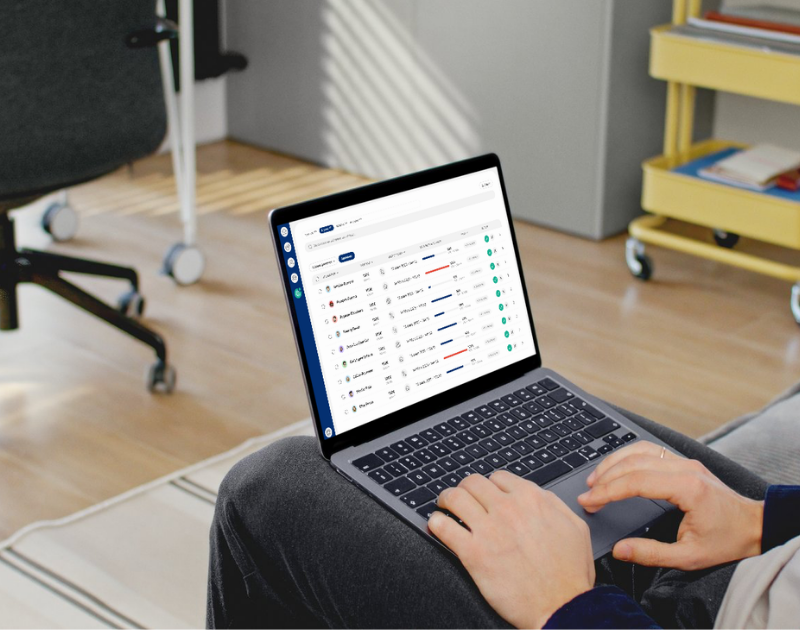
The Oriway SaaS platform analyzes trip data to provide a detailed and actionable overview of each vehicle's usage, without complicating management for your teams.
With the rise of electric and hybrid fleets, the energy cost per kilometer has become a key indicator.
It allows you to compare:
Contrary to popular belief, electric vehicles are not always cheaper if:
To learn more about this topic, we recommend reading our analysis on the profitability and usage of electric fleets, based on the Enedis report: Electric Fleet 2025: Profitability, Usage, and Charging | Analysis of the Enedis report
Energy cost per kilometer includes:
This KPI allows you to:
Between environmental regulations, tax obligations, and local constraints (low-emission zones, non-financial reporting), fleet compliance is becoming a critical issue.
The compliance rate measures the portion of the fleet that adheres to:
A non-compliant fleet exposes the company to:
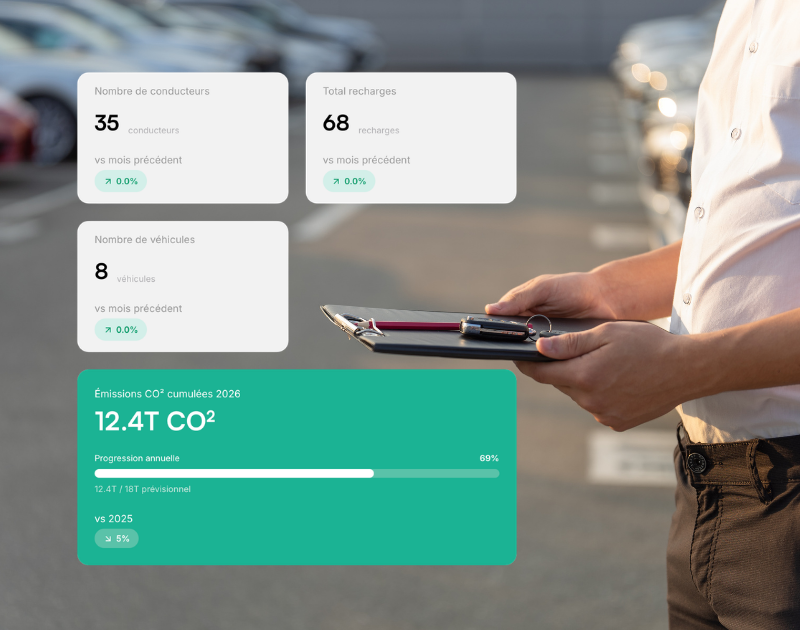
By 2026, it is no longer possible to manage a fleet without measuring its carbon footprint.
This KPI allows you to track:
It is essential for powering:
A mature approach also incorporates:
This is precisely the vision Oriway Business offers, by connecting mobility, energy, and behavioral data.
Tracking KPIs is not enough. The challenge is to turning data into concrete decisions.
Oriway Business was designed to:
More than just a reporting tool, Oriway Business is a management tool for your company's zero-carbon mobility, designed for mobility, finance, and CSR departments.
Fleet management in 2026 relies on a more precise, cross-functional, and strategic approach.
The 5 essential KPIs presented in this article form the foundation of effective management, capable of balancing:
By relying on reliable, usage-oriented indicators, companies can transform their vehicle fleet into a true competitive advantage.
This is the core mission of our teams: helping you better understand, manage, and anticipate professional mobility. At Oriway Business, we believe that electric mobility should not be a burden, but a catalyst for corporate transformation.
As we have shown in this article, the electric transition should not be a constraint, but an economic opportunity.
With Oriway Business, technology and data are put to work for your mobility to turn this transition into a simple, seamless, and profitablelever.
By analyzing real-world usage, costs, energy, and carbon impact, Oriway Business helps you make informed decisions tailored to your fleet and your goals.
👉 Ready to manage your fleet with precision and get ahead of the challenges of 2026?
Discover how Oriway Business can support your mobility strategy and unlock the economic potential of your electric transition.