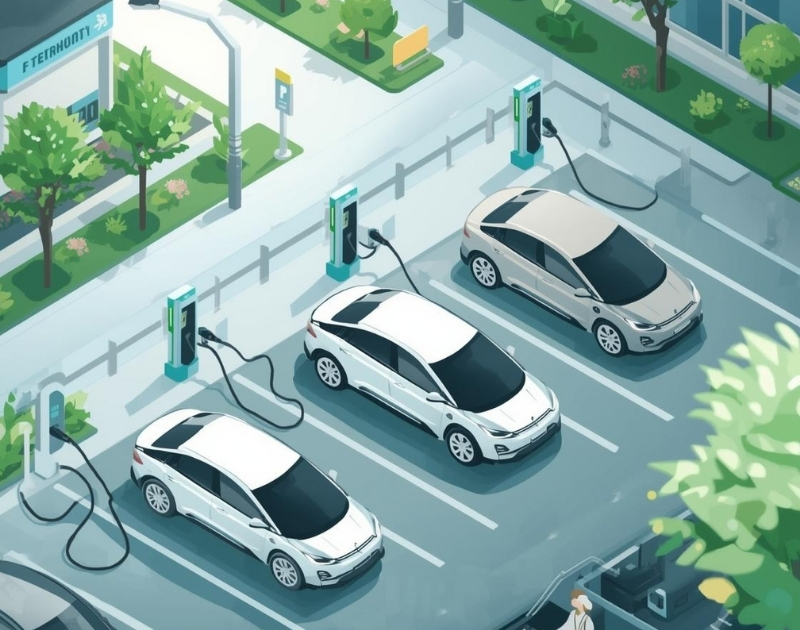



If you are still hesitant about structuring your transition to electric, be aware that the market is no longer waiting. The shift is already massive: according to data fromAvere-France reported by Automobile Propre, corporate vehicles now account for 42% of electric vehicles on the road.
This figure is no coincidence, but the convergence of three realities:
Electrification is therefore no longer a question of "if," but of "how." For you, as a manager, the challenge is now to ensure this acceleration doesn't turn into an administrative nightmare.
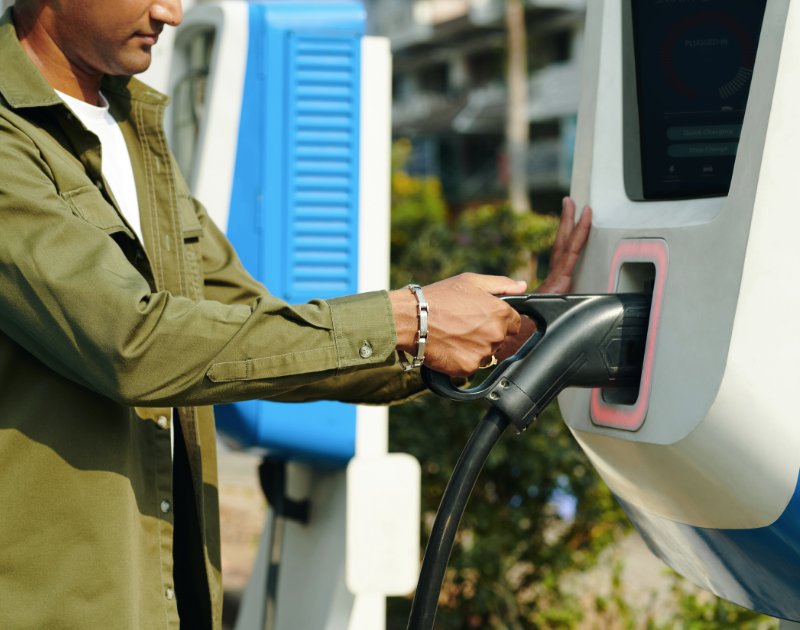
Your first mistake would be trying to replicate the combustion engine model: one gas station equals one fuel card. With electric vehicles, 80% of charging happens where the car is parked overnight.
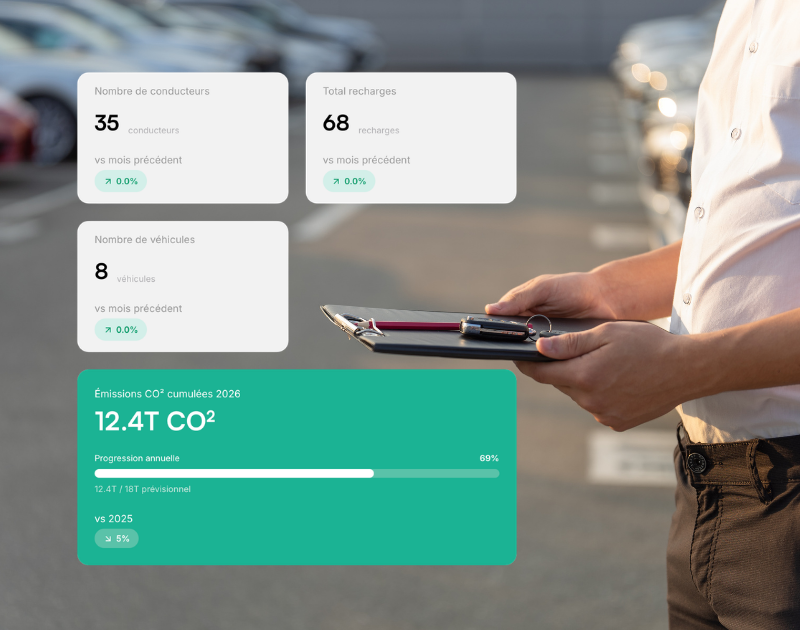
The real challenge for you isn't deciding which charger to install at the office, but how to centralize data coming from everywhere: the office, public charging networks, and most importantly, the home.
To avoid a logistical nightmare, don't multiply your platforms. Your management tool should connect directly to the vehicle (via API) to retrieve source data. It is the only way to get a comprehensive overview without installing hardware everywhere.
This is the issue that makes your CFO sweat: how do you reimburse an employee for home charging without it becoming a hidden taxable benefit?
Forget flat rates or rough estimates. To sleep soundly, your reimbursement system must be fully compliant with tax authorities.
This means:
When you automate this, you don't just save time: you eliminate a major financial risk for your company.
Read also: Electric cars: why there is so much conflicting information (and how to make sense of it) to help your drivers clear up their final doubts.
Never forget that the Total Cost of Ownership (TCO) of your fleet depends heavily on the person behind the wheel. A driver who puts too much strain on their battery or ignores basic charging rules can cause your costs to skyrocket.
Instead of using top-down instruction that doesn't work, use gamification. If your driver sees that smooth driving earns them tangible benefits, they naturally become a driver of your economic performance. The transition is no longer an imposed constraint, but a rewarding collective challenge.
Train your teams to manage range and anticipate charging needs to optimize your operational costs.
A successful electrification strategy isn't about choosing the vehicle with the biggest battery. It's about choosing the ecosystem that makes this transition invisible to your accounting and seamless for your employees.
Take advantage of the network expansion (the famous plan for 30,000 charging stations on major routes by 2035) to reassure your high-mileage drivers, but save your energy for structuring your daily charging data. That is where your savings are hidden.
Planning to structure your fleet? Don't face your questions alone. Let's take the time to see how to turn your fleet management into a growth driver.