


Summer doesn't stop business activity: sales reps on the road, mobile technicians, and traveling executives continue to commute while the public charging network absorbs a surge in traffic linked to holiday departures.
For a fleet manager, this period requires special vigilance, as the difficulties encountered by professional employees on the road are often the same as those faced by vacationers, yet the company may not have anticipated the issue.
The latest barometers published by Avère-France in collaboration with the Ministry of Ecological Transition show an average consumption per charging point up by nearly 70% year-on-year, driven by the growth of the French electric vehicle fleet. This increased usage, combined with seasonal peaks in holiday departures, mechanically results in more frequent queues and technical availability of fast chargers that can occasionally decline on the busiest routes.
A sales representative who has to attend several meetings in a single day does not have the same flexibility as a vacationer: a delay caused by an unavailable charging station can have a direct impact on their schedule, or even on client relationships. It is precisely this type of situation that a company benefits from anticipating before the summer, rather than managing it on a case-by-case basis when it occurs.
Not all employees face the same level of risk: those who regularly travel long distances, especially on busy summer routes, deserve priority attention. A quick check-in with sales or technical teams before the season begins helps identify these individuals and allows you to plan for the most challenging routes together.
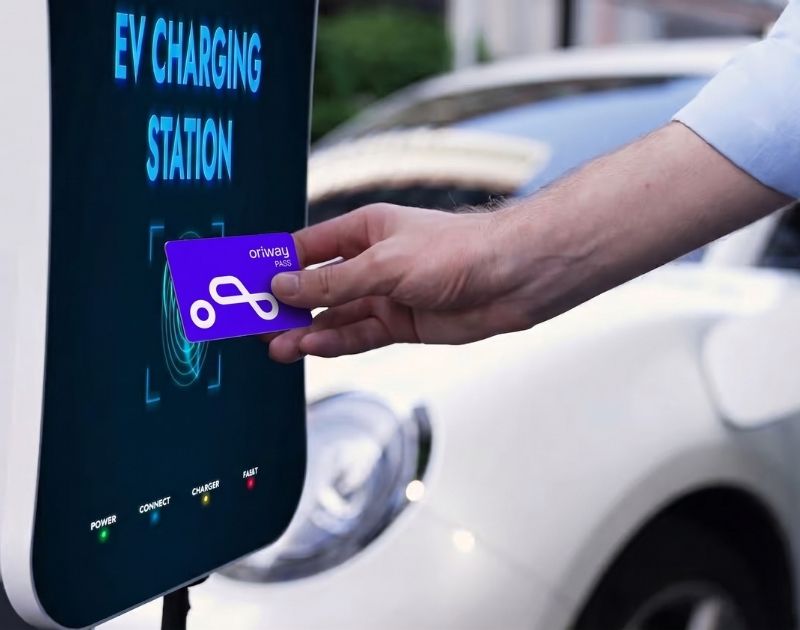
A charging solution limited to a single network increases the risk of your employees getting stranded: if their usual charging station is unavailable, they need to be able to switch to an alternative immediately without extra administrative hurdles. This is the key advantage of an eMSP solution that covers a wide network of partners, a topic we cover in detail in our comprehensive guide to corporate charging.
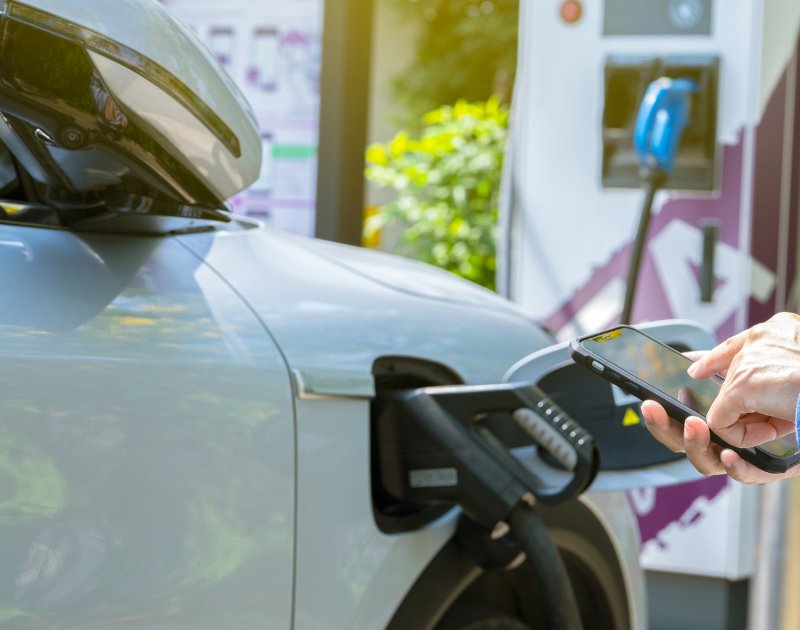
A charging app with real-time updates allows your employees to reroute to a station that is actually available, without wasting time searching for a solution in a pinch. For the company, this means business continuity is maintained, even during the busiest weeks on the public network, and provides peace of mind for employees who don't have to manage this risk on their own.
At Oriway, this reliability relies heavily on the trip planner integrated into the app.
An employee on the road simply enters their starting point, destination, and current battery level, and the route is calculated automatically—including charging stops—while accounting for the actual terrain of the journey rather than just the distance. For business trips between appointments, this means no last-minute surprises disrupt the schedule: the charging logistics are handled before they even set off.
We detail how this planner works—originally designed for holiday travel—in our article Electric cars on holiday: how to plan your charging stops on the road, and cover the fundamentals of trip planning in Electric vehicles: mastering your range and planning your charging stops. If a planned charging station turns out to be unavailable upon arrival, the app immediately recalculates a nearby alternative, so the employee doesn't have to interrupt their journey to search for a solution.
It is not saturated in the strict sense, but usage data shows a clear intensification of demand and occasional technical performance issues at fast-charging stations during peak departure times.
By identifying the employees most likely to be affected before the summer and ensuring their charging solution covers a wide network of stations rather than just a single operator.
Yes, due to the concentration of holiday departures on specific routes and during certain periods, which creates temporary spikes in demand that the network does not experience to the same extent the rest of the year.
By automatically calculating the route and necessary charging stops based on the starting point, destination, and battery level, while accounting for the terrain, which eliminates the need for guesswork during the trip.